
The Bazaar of Belief
We all must choose how we interpret the world

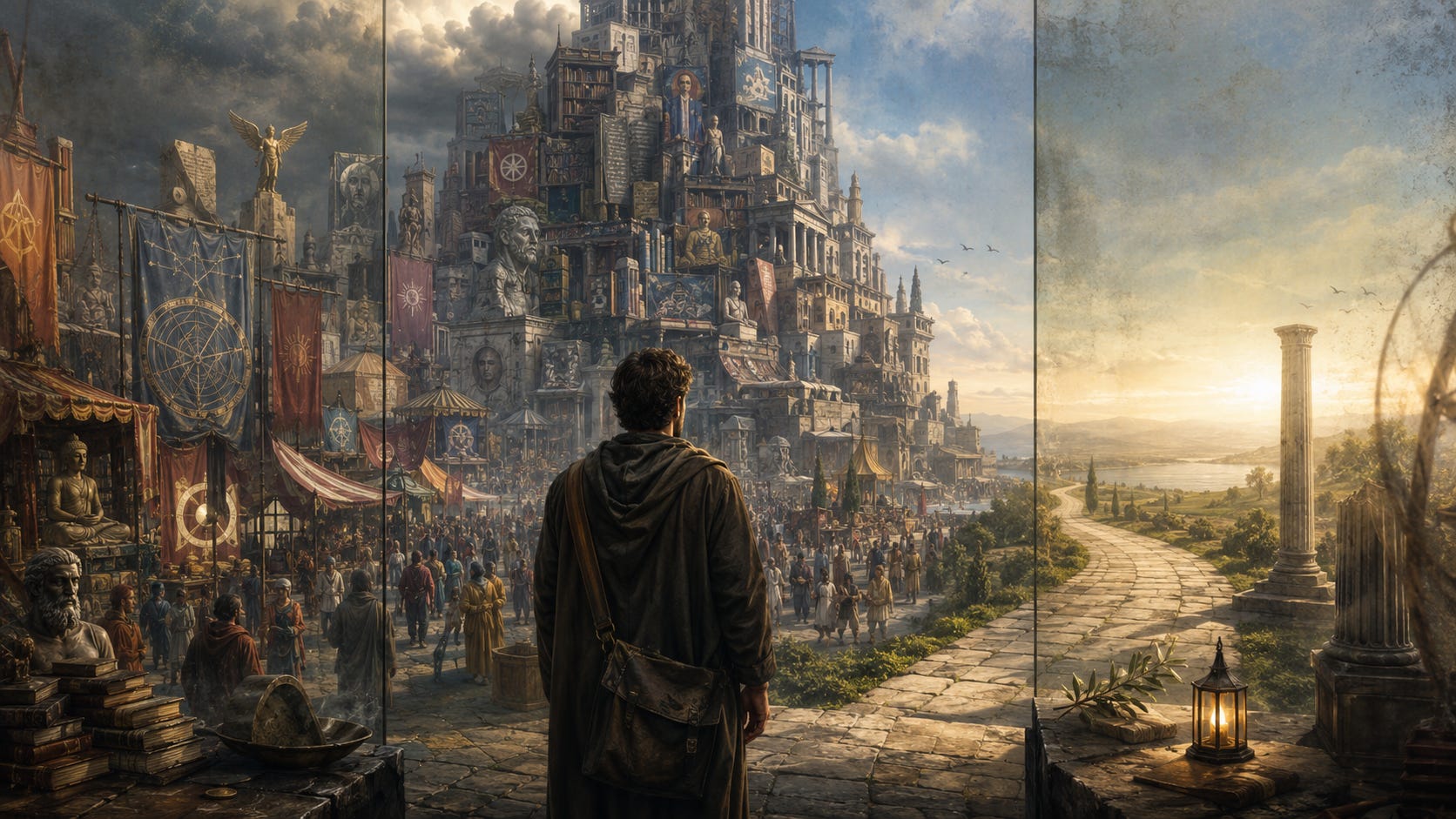
The modern world is a bazaar of beliefs, all shouting and pulling at our minds, telling us that they alone hold the true picture of reality. Without a firm grasp on what we believe to be true, we are likely to be sold a bill of goods by whoever can best capture our attention.
Our initial beliefs about the world were formed by our parents, our community, and the world we grow up in. They told us who we could trust and who to be wary of. What is true, the meaning of past events and how to judge the behavior of others. As we grew and experienced more of the world, these beliefs evolved based on our experiences. Those that we were told are trustworthy, due to a bad encounter, we may instead have learned to distrust. Likewise, things or people we were told to avoid, we may have found to be innocuous or even helpful.
What we have to learn, but often don’t, is that our beliefs are not reality. They are a static, crude picture—a soot-covered window through which we peer—of what reality really is. While they can be helpful in avoiding pitfalls along our journey through life, they are not the road itself, and not realizing this is the biggest mistake we can make. We forget that our beliefs are only a representation of reality, based on what we were taught and what we developed as we grew. We are always looking through those beliefs to interpret what we see and experience in the world. What we forget is that everyone else is doing the same based on the beliefs they grew up with, which can be radically different from ours. Those that share our beliefs may look at a situation and draw the same conclusions we do. Those with a different set of beliefs, developed based on a life growing up in a different environment and culture, may form totally different conclusions that, while we may find them nonsensical or repugnant, are as totally self-evident to them as they find our beliefs nonsensical or repugnant.
The world then is the real Tower of Babel, not of speech but of belief. We all think that how we see the world is right and obvious and that those who disagree are wrong, misinformed, or just plain ignorant. Why then do we fight so hard to defend our beliefs and convince others of the error of their ways? It depends on the basis of these beliefs and what their core message is.
If our worldview is based on a religion, we may think that the world and the people in it were created by a god or gods, that our purpose in life is to live by their dictates, and that we will receive a reward in an afterlife for adhering to these instructions. We likewise may be told that not only should we seek to convince others of the error of their ways, but depending on our religion, we must do so, and that those who resist are to be subjugated or killed if they resist.
If our worldview is based on an ideology, either political or social, we may see the world in terms of oppression, mismanagement, or exploitation. In order to save the world or the unseeing masses from their delusions and the supposed harms caused by them or others, we must take action to save them from themselves. If the guilty, or even some innocents, are harmed in correcting these errors in thinking, then that is the unfortunate price to be paid in order to achieve the enlightened future where all strife will be a thing of the past and all deviant thoughts, tendencies (or people) are eliminated.
Lastly, there are those who reject these narratives and have decided that their existence is nothing more than the result of random chance and that their life is meaningless as a result. In their view, they might as well enjoy life to the fullest extent possible, and if others are harmed or exploited in the process, what does it matter? Depending on their circumstances, this can range from simple narcissism to a massive evil that harms others, as they accumulate wealth and power for no other purpose than to build ever larger monuments to their ego or pleasure.
What then is the answer to life? As is obvious, there are countless answers, all with their bands of followers proclaiming theirs is “the truth, the whole truth, and nothing but the truth.” However, the numbers of these followers has no relation to whether their truth actually reflects the real world; otherwise, we would find that the sun does orbit the earth, as was the near-universal belief not that long ago. The popularity of a belief has no relation to its veracity.
We can, and indeed must—by default or intent—choose a set of beliefs to guide our lives. To do otherwise is to be a rudderless ship, constantly buffeted by the winds of social trends and events, or sink into despair.
Of all the religious, ideological, and self-serving options available, living a life of Stoic virtue still seems to me to be the best alternative. Doing so does not preclude having a religious or social passion in addition, but it provides the stable foundation by which to judge whether the actions that these causes may promote are worthy of our participation. As Tolkien so wisely wrote in the Lord of the Rings,
“It is not our part to master all the tides of the world, but to do what is in us for the succour of those years wherein we are set, uprooting the evil in the fields that we know, so that those who live after may have clean earth to till. What weather they shall have is not ours to rule.”
Indeed. Whether this life is all we have or just one in a countless cycle of learning, it still seems to me our best option is to help others as best we can, while we can. If there is a reward in some afterlife for our efforts, so much the better. If not, then our works are our legacy, so that people may remember us as a good person who strove to make the world a better place.